
Blog Article
Early Warning Signs That Justify a Mold Inspection in Metro Vancouver
March 6, 2026 - 8 min read
How to tell the difference between a passing nuisance and a reason to book a mold inspection.
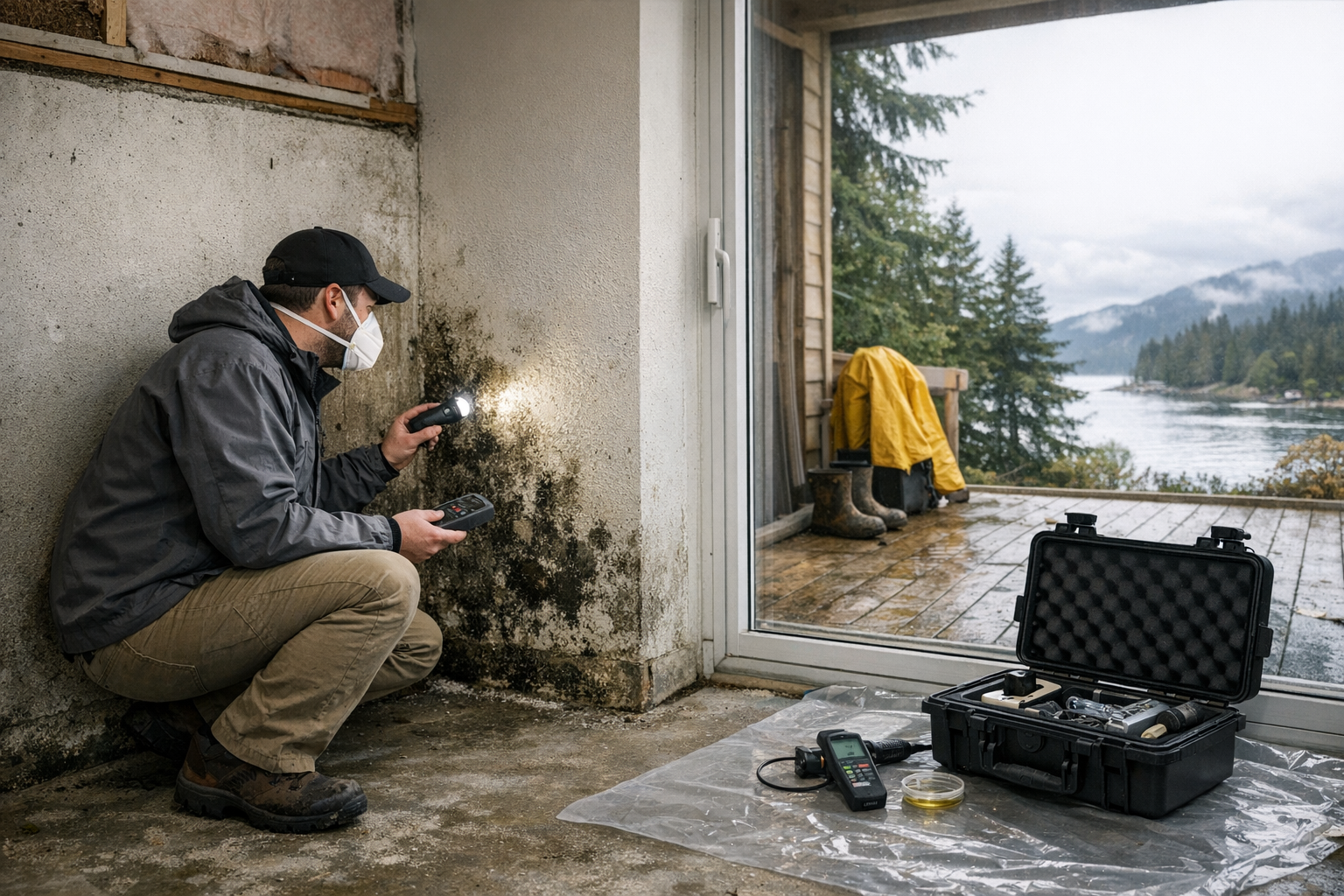
Visible Staining Is Only Part of the Story
A dark patch, bubbling paint, or repeated staining does not automatically tell you what is active today, but it is a reason to look closer. Mold concerns often show up alongside condensation patterns, past leaks, or hidden moisture paths that are easy to overlook when you focus only on the most visible area.
Odour and Repeat Moisture Matter
Persistent musty odours, recurring dampness, or areas that never seem to dry properly are often the signals that justify an inspection. Even when visible growth is limited, repeated moisture conditions can point to ventilation, drainage, or enclosure problems that need to be understood before repairs start.
Use Inspections Before Scope Starts Growing
Owners often wait until the concern feels undeniable, but that delay tends to make decisions harder, not easier. Booking once the pattern becomes repeatable usually gives you a cleaner chance to identify likely contributors and keep the next step proportionate to the problem.
Buyers and Managers Need Clear Language
A useful inspection does not just say that something looks wrong. It explains what was observed, where the concern appears concentrated, and what kind of follow-up makes sense next. That matters most when a buyer, property manager, or strata decision-maker needs to move quickly.
The Goal Is Better Decision-Making
A mold inspection is ultimately about clarity. The strongest outcome is not more alarm. It is a cleaner understanding of visible condition, probable moisture context, and what kind of remediation, repair, or monitoring step should follow.
Related service areas
Featured service packages
Residential Mold Inspection
Owners or buyers who want clearer inspection findings before deciding on remediation or repairs
Moisture Source Investigation
Repeat moisture issues, recurring smells, or rooms where the same problem keeps returning